Practical thinking on governance, integration, assurance and the structural causes of program drift — drawn from 20+ years on Australia's hardest Defence programs.

Narrative management is not dishonesty. It is something subtler and, in many ways, more dangerous. It is the progressive alignment of formal reporting toward what governance bodies want to hear, rather than what they need to know. How it starts It rarely begins as a deliberate choice. A program team faces a difficult reporting period. […]
Sovereign capability is most often discussed in the language of acquisition — platforms, facilities, and the transfer of technology and intellectual property onshore. That language is not wrong, but it describes the inputs to sovereignty rather than the condition itself. Sovereignty is not a state achieved at the point of materiel acceptance. It is the […]
The point at which a program hands over to operations is not the end of the governance challenge. It is the point at which the consequences of every governance decision made during acquisition finally become visible and attributable. For the program owner, transition is where the record of how the program was governed is read […]
Most governance frameworks are designed to identify bad news. But what if one of the biggest governance risks is actually good news? In my experience, some of the most troubled programs don’t report increasing problems. They report increasing confidence. Green dashboards. Positive forecasts. High levels of assurance. Yet beneath the surface, uncertainty is growing, assumptions remain untested, and […]
After more than two decades working across Defence acquisition, sustainment, systems engineering, and capability assurance programs, I’ve become increasingly convinced of one thing: Most major Defence programs do not fail because the technology is impossible. They fail because governance progressively loses the ability to control complexity. In several large Defence programs I’ve supported—spanning integrated tactical […]

One of the biggest misconceptions in complex Defence programs is that assurance is primarily about compliance. It isn’t. Real assurance is the organisation’s ability to maintain technical integrity under pressure. Over the last decade, working across multiple Defence acquisition and sustainment programs involving integrated tactical networks, mission systems, safety-critical capability, and complex transition environments, I’ve […]
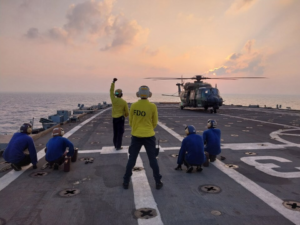
In large Defence programs, the most persistent risk is not failure – it is the confidence that everything is under control when key signals are starting to drift. Most programs don’t collapse suddenly. They degrade gradually while still reporting against plan. Typically, three shifts occur under delivery pressure: Over time, this creates a growing gap […]
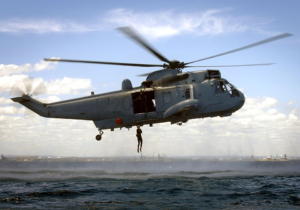
In Defence, delivery failure is rarely technical — it’s structural. One of the most persistent challenges in complex Defence capability programs is not catastrophic failure — it is gradual, almost imperceptible drift. Program drift rarely begins with a major event. It starts quietly: Over time, the program slowly separates from its original engineering intent. Across […]